DROBNOVRATNIK
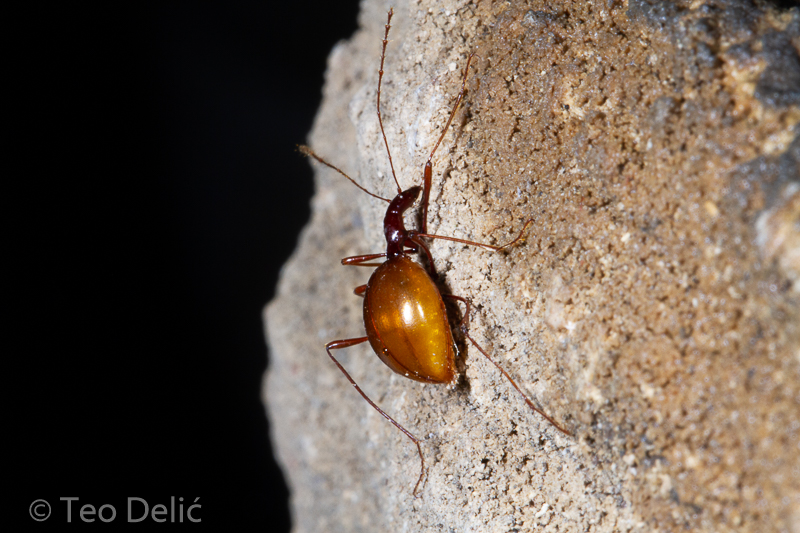
Znanstveno ime: Leptodirus hochenwartii
Avtor in leto opisa: Schmidt, 1832
Družina: Leiodidae (zemljarji)
Red: Coleoptera (hrošči)
Razred: Insecta (ektognatne žuželke ali insekti)
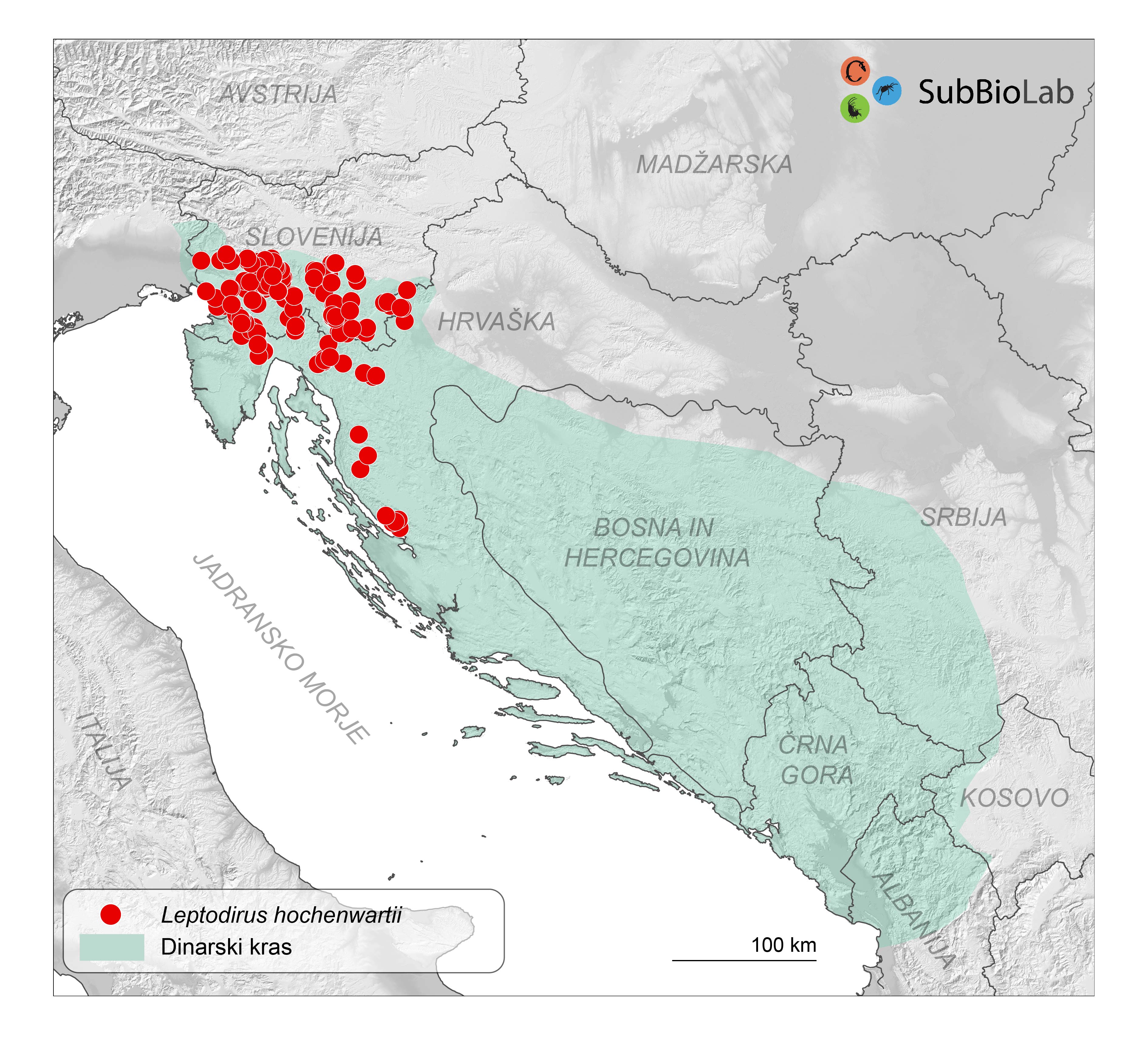
Območje razširjenosti
Ko je leta 1831 svetilničar Luka Čeč zagledal nenavadnega hrošča na kapniku Postojnske jame, je bil dovolj radoveden, da ga je pobral in prinesel na plano. Predal ga je naravoslovcu grofu Hochenwartu, ta pa ljubiteljskemu koleopterologu Ferdinandu Schmidtu. Ta je prepoznal njegovo posebnost, ga leto pozneje znanstveno opisal in mu poleg latinskega znanstvenega imena dodelil tudi slovensko in nemško ime. Ker je bil primerek poškodovan, je Schmidt razpisal izjemno visoko nagrado za nepoškodovanega, ki pa ga precej pozneje našel šele sam.
Drobnovratnik je zaenkrat edina znana vrsta rodu, ki pa vključuje šest različnih podvrst. Povsem mogoče je, da bodo v prihodnje molekulske raziskave potrdile, da gre dejansko za ločene vrste.
Značilna oblika telesa je posledica podaljšanega ozkega prvega člena oprsja in kroglastega zadnjega dela telesa. Pri tem je zadek plosk, močno obokane so le nad zadek dvignjene pokrovke, pod katerimi je prazen prostor. Gre torej za lažno napihnjenost zadka ali psevdofizogastrijo. Razlog zanjo še ni znan. Ena od možnosti bi bila, da bi prostor služil za nošenje jajc pri samici, druga pa, da bi bila tu vlažnost višja, kar bi hroščka varovalo pred izsušitvijo.
Zemljarji (Leiodidae), predstavljajo kar 2/3 vrst podzemeljskih hroščev, sledijo pa jim predstavniki iz družine krešičev (Carabidae; Trechinae) in nekaj vrst kratkokrilcev (Staphylinidae; Pselaphinae). Medtem, ko se večina predstavnikov družine zemljarjev prehranjuje z različnimi organskimi ostanki in mrhovino, so krešiči plenilci, ki lovijo druge jamske nevretenčarje.