DOLGOROGA FERHOFIELA
.jpg)
Znanstveno ime: Verhoeffiella longicornis
Avtor in leto opisa: Absolon, 1900
Družina: Entomobryidae (entomobriide)
Red: Collembola (skakači)
Razred: Entognatha (entognatne žuželke)
Območje razširjenosti
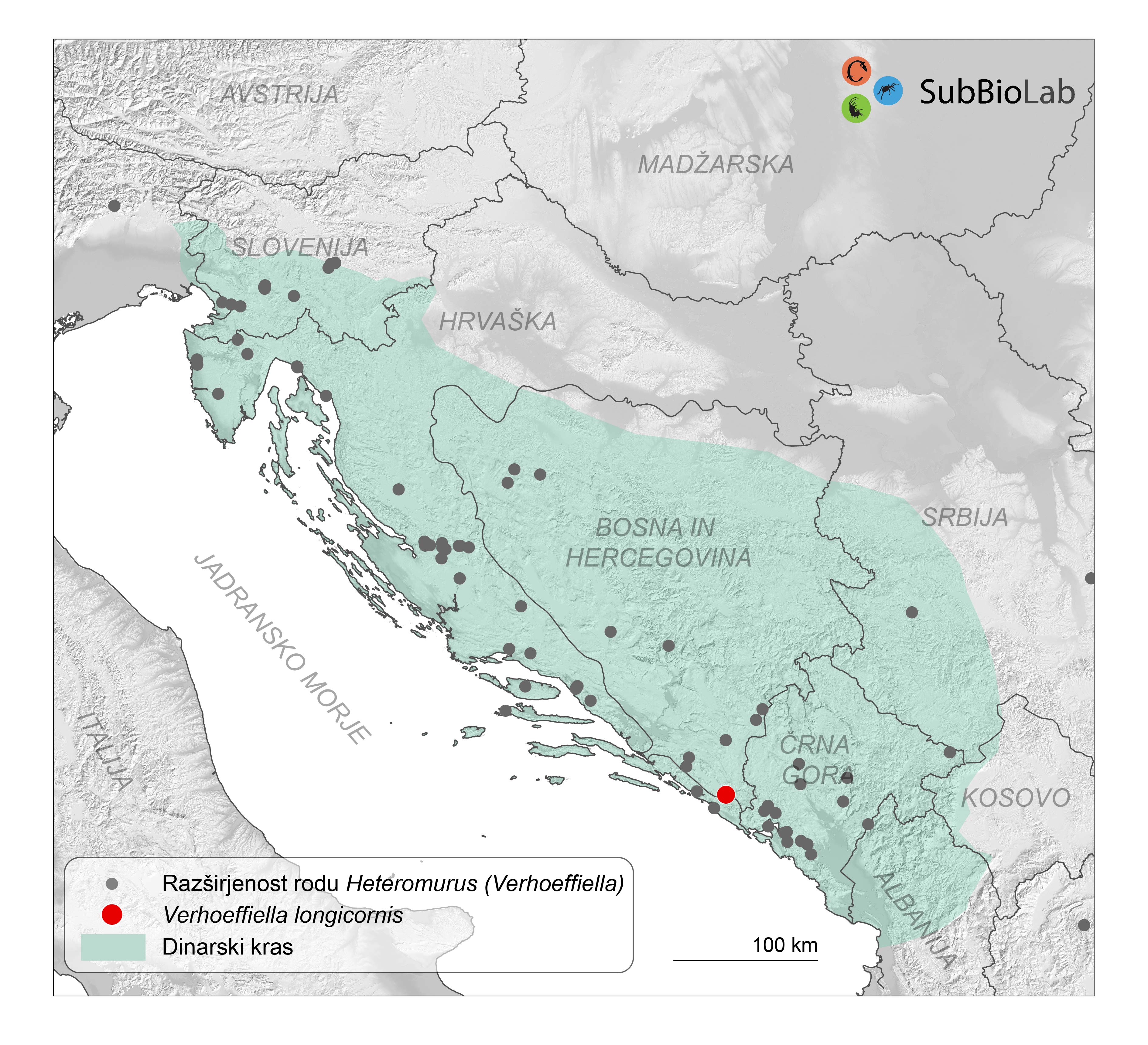
Drobne živali, ki neutrudno poskakujejo po jami, naj si bo na kupu gvana ali na mirni vodni gladini, so lahko le skakači. Na trebušni strani zadka imajo tako imenovano furko, viličasto skakalno vzmet, ki žival izstreli v zrak, da lahko pobegne plenilcu. Le nekateri skakači so furko, in z njo sposobnost skakanja, povsem izgubili.
Skakači so drobceni šesteronožci, veliki največ nekaj milimetrov. V podzemlju so pogosto zelo številčni, na naplavljenem kosu lesa jih lahko včasih najdemo na stotine.
Kot mnogo podzemeljskih skupin, so bili tudi skakači kot raziskovalni objekt dolgo zapostavljeni. Tako ta pestra skupina še vedno skriva nešteto neopisanih vrst, z različnimi prilagoditvami na podzemeljske mikrohabitate. Na srečo so najnenavadnejše “pošasti” med njimi velike le nekaj milimetrov, ki pa imajo na nogah ogromne kremplje. Z njimi izkoriščajo površinsko napetost vode, kar jim omogoča brezskrbno sprehajanje po gladini.
Zaradi svojega poskakovanja so zahteven zalogaj ne le za podzmeljske plenilce ampak tudi speleobiologe - najlažje jih ujamejo z ekshavstorjem (“sesalnikom”), s katerim posesajo žival v posodico. Obnese se tudi lov z vlažnim čopičem ali prstom, na katerega se prilepi žival.